A beautiful home does not depend on expensive furniture or constantly changing trends. Good interior styling comes from thoughtful choices about colour, furniture, lighting, texture and the way each room is arranged.
The goal is to create a home that looks balanced while still feeling comfortable and practical. Small changes to your home décor can often make more difference than a complete redesign.
Start with a Clear Colour Palette
Choosing colours before buying accessories makes it easier to create a consistent look.
Start with two or three main shades that work naturally together. Neutral walls can provide a flexible background, while cushions, artwork, rugs and smaller furniture pieces can introduce stronger colours.
You do not need every room to use exactly the same palette. Repeating a few colours throughout the house can simply help different spaces feel connected.
Get the Furniture Arrangement Right
Furniture placement has a major effect on how comfortable a room feels.
Avoid automatically pushing every piece against the walls. In larger living rooms, bringing chairs and sofas closer together can create a more comfortable conversation area.
Think carefully about movement too. A good room design should leave clear routes between doors, furniture and frequently used areas without making the space feel empty.
Mix Textures for a Warmer Look
Rooms can feel flat when every surface has a similar finish.
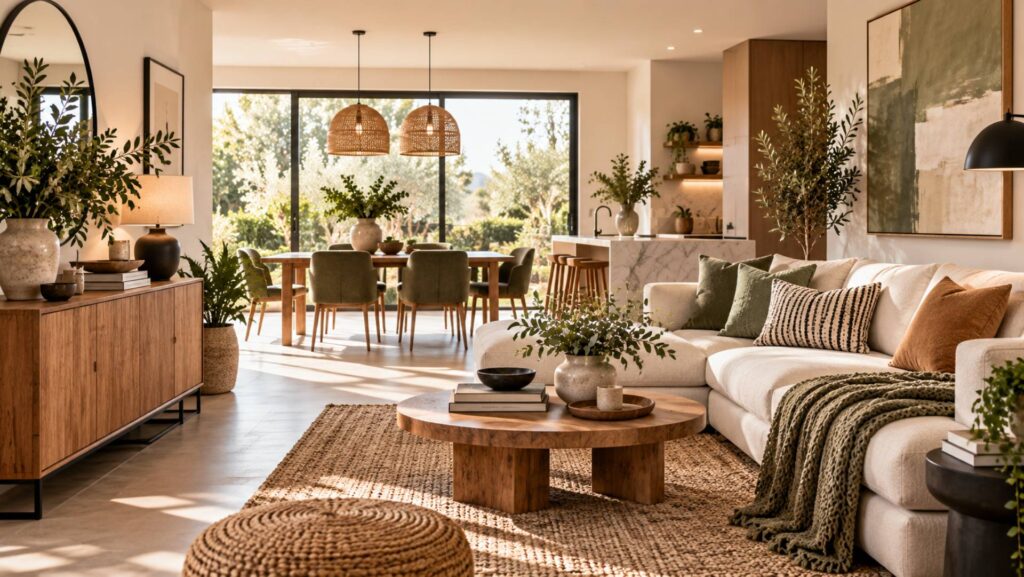
Combine materials such as timber, cotton, wool, glass, ceramics and natural fibres. A soft rug beneath a wooden table, for example, can add warmth without introducing another strong colour.
Texture is particularly useful in neutral rooms because it creates interest while keeping the overall appearance calm.
Use Lighting at Different Levels
A single ceiling light rarely creates a comfortable atmosphere on its own.
Combine overhead lighting with table lamps, floor lamps or wall lights. Different light sources allow you to adjust the mood depending on how the room is being used.
Natural daylight should also influence furniture placement. Avoid unnecessarily blocking windows with large furniture, and use mirrors carefully where they can help distribute light through darker areas.
Choose the Right Size Furniture
Furniture should suit the proportions of the room.
A large sectional sofa may overpower a compact living area, while very small furniture can look lost in a spacious room. Measure carefully before buying major pieces and consider how much open space will remain around them.
Correct proportions often make a room look more polished without requiring additional decoration.
Give Every Room a Focal Point
A focal point gives the eye somewhere to settle when entering a room.
It might be a fireplace, artwork, an attractive sofa, a dining table or a large window with a pleasant view. Arrange nearby furniture and accessories so they support the focal point rather than compete with it.
Avoid trying to make every object stand out. A few quieter elements allow important pieces to have greater impact.
Style Shelves Without Overfilling Them
Bookshelves and open storage can add character, but overcrowding quickly makes them look untidy.
Mix books with a small number of decorative objects, framed photographs or plants. Leave some empty space between groups so individual pieces remain visible.
Changing the height and shape of objects also creates a more relaxed appearance than lining everything up evenly.
Bring Plants into Your Rooms
Indoor plants can add colour, shape and natural texture to almost any room.
Choose varieties that suit the amount of available daylight rather than selecting plants purely for appearance. Large plants can fill empty corners, while smaller varieties work well on shelves, tables and windowsills.
Containers matter too. Simple pots that complement the room’s colours often look more considered than a collection of unrelated designs.
Add Personality Through Accessories
A stylish home should still feel like someone actually lives there.
Photographs, artwork, books, travel finds and favourite objects can give rooms individuality. Instead of buying decorative items simply to fill empty surfaces, choose pieces that have visual or personal value.
This approach to interior design helps prevent rooms from feeling like impersonal showrooms.
Use Rugs to Define Areas
Rugs can provide colour and texture while helping define different zones.
In a living room, choose a rug large enough to connect the main seating pieces. A rug that is too small can make furniture appear disconnected.
In open-plan spaces, rugs are particularly useful for separating dining, seating and working areas without adding walls or dividers.
Keep Decorative Details Balanced
Accessories should support the room rather than take over every surface.
A few carefully chosen cushions, lamps, ceramics and artworks usually create a stronger result than filling every available space. Periodically removing items can also help you see which pieces actually contribute to the room.
Good styling often involves knowing when to stop.
FAQs
How can I make my home look more stylish?
Start with a consistent colour palette, improve furniture placement and introduce texture through rugs, cushions, curtains and natural materials. Good lighting also makes a noticeable difference.
How can I style a home on a small budget?
Rearrange existing furniture, repaint selected areas, change cushion covers, introduce plants and update smaller accessories. You do not need to replace everything at once.
Should every room have the same style?
No. Rooms can have different personalities while still sharing a few colours, materials or design details that create continuity throughout the home.
How do I make a room feel less cluttered?
Remove items that are rarely used, improve storage and avoid filling every shelf or surface. Leaving some open space makes important objects easier to notice.
What should I buy first when styling a room?
Begin with major functional pieces such as the sofa, bed or dining table. Once these are positioned, choose rugs, lighting, curtains and accessories that work around them.
Conclusion
Successful interior styling comes from balance rather than following a strict set of trends. Furniture should fit the room, colours should work comfortably together, and decorative details should support the way you actually use your home.
Take time to build each space gradually. By combining practical furniture, thoughtful lighting, natural textures and meaningful accessories, you can create a home that feels attractive, comfortable and personal for years to come.