
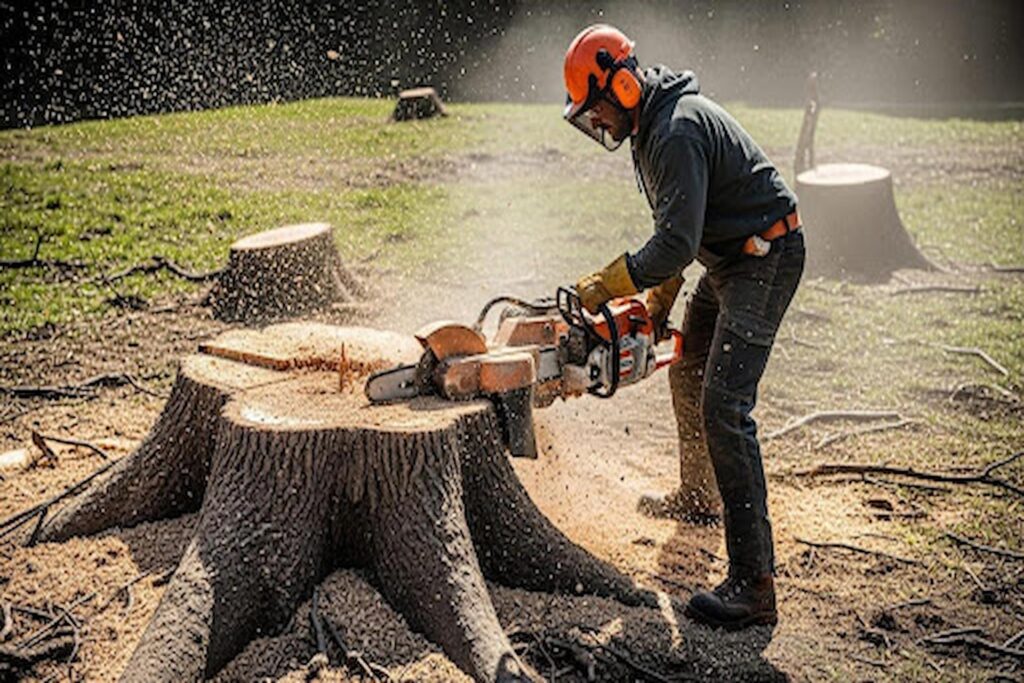
Cutting down a tree is often seen as the hardest part of managing your landscape, but once the chainsaw stops and the branches are cleared, you are left with a stubborn reminder of what used to be there: the stump. For many Australian homeowners, dealing with this leftover base is an afterthought. It sits in the middle of the lawn, gets hidden by grass, or becomes a makeshift stand for a pot plant.
However, ignoring a stump can lead to a host of problems down the track. From attracting unwanted pests to creating a safety hazard for your family, leaving a stump in the ground is rarely a good idea. This is where professional stump removal comes into play. It is the definitive way to reclaim your garden and ensure the job is actually finished.
Unlike chopping down a tree, which relies on gravity and cutting angles, removing a stump is about grinding and earthworks. It requires specialized machinery and a deep understanding of what lies beneath the soil. Whether you are in the suburbs of Melbourne or a regional town, understanding why and how to remove a stump is essential for maintaining a healthy, usable property.
Why Leaving a Stump is a Risk
There is a common misconception that a stump will simply rot away on its own if left long enough. While this is technically true, the timeline is often decades, not months. During that time, the decaying wood becomes a liability.
The Termite Magnet
In Australia, the biggest concern with old tree stumps is “white ants” or termites. Termites love damp, decaying wood. A stump left in the ground is essentially a welcome sign for a colony. Once they establish themselves in the stump, they begin looking for other food sources. If your home is nearby, the risk of them migrating from the garden to your house frame increases significantly. Professional stump removal eliminates this food source entirely, helping to protect your biggest asset.
The Suckering Problem
Many Australian native species, as well as vigorous exotic trees like Willows or Poplars, do not die just because you cut the trunk. The root system remains alive and full of energy. To survive, the roots send up new shoots, known as suckers.
You might find these shoots popping up in your lawn, your garden beds, or even cracking through nearby paving. You can cut them back, but they will keep returning. The only way to stop this cycle is to destroy the root crown through mechanical stump removal.
Safety and Aesthetics
On a practical level, a stump is a trip hazard. In long grass, it is invisible. For children playing in the yard or for elderly relatives walking through the garden, a hidden stump can cause serious injury. Furthermore, it damages lawnmowers. Hitting a hardwood stump with a mower blade can bend the shaft or shatter the blade, leading to expensive repairs.
How the Grinding Process Works
The most effective method for getting rid of a stump is stump grinding. This is not a job for a shovel and a mattock. Digging a stump out by hand is back-breaking work and often requires digging a hole massive enough to expose the widespread root system.
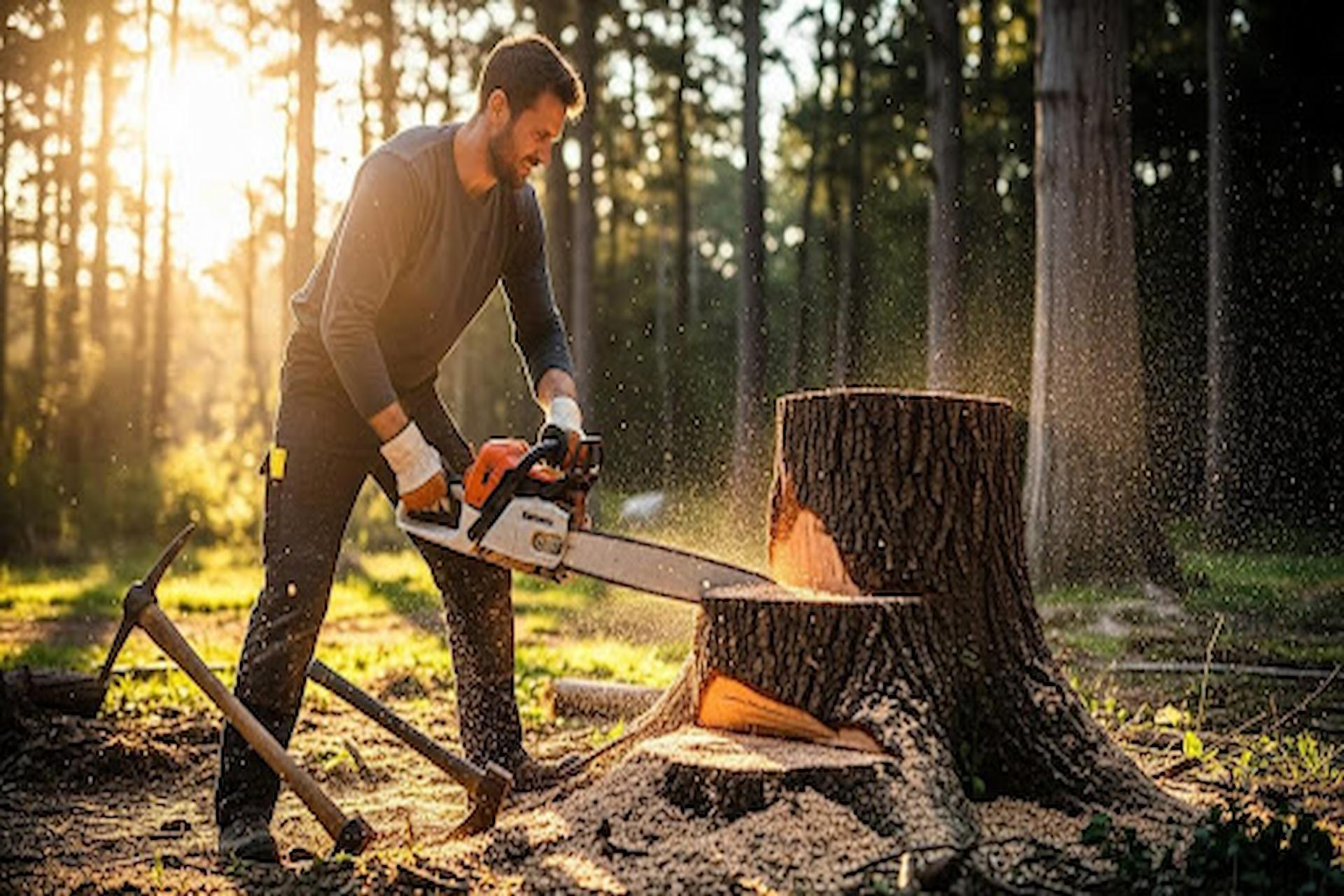
A professional stump grinder is a heavy-duty machine equipped with a rotating cutting disk. This disk has tungsten carbide teeth that spin at high speed. The operator moves the disk across the stump, shaving the wood down into small chips.
The process involves grinding the main trunk well below ground level—usually between 150mm to 300mm deep. This depth is sufficient to sever the connection to the main roots and destroy the “heart” of the stump. Once this is done, the tree cannot regrow.
What Happens to the Roots?
People often ask if the entire root system needs to be pulled out. Generally, the answer is no. Once the main stump (the root crown) is ground away, the remaining lateral roots are cut off from their life source. Over time, these roots will naturally decompose in the soil without causing issues or attracting termites in the same way a large, exposed stump does.
Navigating Underground Hazards
One of the critical reasons to hire a professional for stump removal rather than renting a machine yourself is the danger of underground services. Australian backyards are crisscrossed with pipes and cables.
Gas lines, water pipes, NBN cables, and electrical wiring often run through gardens. If a tree was planted years ago, its roots might have grown around these services. A professional operator will always inspect the site first. In Australia, using the “Before You Dig” service is standard practice to identify where mains infrastructure is located.
An experienced operator knows how to “read” the ground. They can often tell where a pipe might be by the layout of the house and the street. They grind carefully, inch by inch, ensuring that they remove the wood without slicing through a water main or a gas pipe, which could be dangerous and incredibly costly to fix.
Managing the Mulch
When a stump is ground down, it expands in volume. A solid block of wood turns into a large pile of woodchips and soil mixture. This creates a mound where the stump used to be.
You have options for what to do with this material.
Backfilling: The most common approach is to use the mulch to fill the hole left by the stump. Over a few months, this mulch will settle and decompose.
Garden Mulch: The excess woodchips make excellent mulch for other parts of your garden. It helps retain moisture and suppresses weeds.
Removal: If you want the area completely clear immediately, you can arrange for the mulch to be carted away, though this often incurs an additional fee.
Replanting and Site Usage
Once the stump removal is complete, the area becomes usable again. However, if you plan to replant a new tree in the exact same spot, you need to let your provider know.
Grinding for replanting requires going deeper than a standard grind. The operator needs to ensure that the vertical taproots are removed to give the new tree space to establish. If you just want to turf over the area, a standard grind depth is usually sufficient. You simply remove some of the wood chips, top up the hole with quality topsoil, and lay your grass seeds or turf rolls.
Accessibility Issues in Local Yards
Melbourne and Australian properties vary greatly in access. Some have wide driveways, while others have narrow side gates or steps. Professional stump grinders come in various sizes to handle this.
There are large, tow-behind machines for massive stumps in open areas, and smaller, self-propelled units that can fit through a standard pedestrian gate. When booking a job, measuring the width of your gate is crucial. This ensures the team brings the right machine for your specific property constraints.
Questions and Answers: Common Questions About stump removal in Australia
Q: Will the tree grow back after stump grinding?
No. Proper stump grinding removes the “root crown,” which is the mechanism the tree uses to regenerate. Once this central hub is destroyed and ground into mulch, the tree is effectively dead and cannot sprout new growth. However, if you only grind the top off and leave the root crown intact, some vigorous species might try to return. This is why professional depth is important.
Q: How much does stump removal cost?
The price varies based on the diameter of the stump. It is usually measured across the widest point of the stump at ground level. Other factors include access (is it hard to get the machine in?), the type of wood (hardwood vs. softwood), and whether surface roots also need grinding. A quick photo sent to your provider is often enough to get an accurate quote.
Q: Can I use chemicals to rot the stump instead?
You can, but it is a very slow process. Products like “stump killer” or potassium nitrate can take months or even years to break down a hardwood stump effectively. In the meantime, the stump remains a termite risk and an eyesore. Mechanical stump removal is instant and environmentally cleaner as it avoids pouring strong chemicals into your soil.
Q: Do I need to check for pipes before you start?
While a professional operator will exercise caution, it is the property owner’s responsibility to advise on any private pipes or cables (like reticulation or power to a shed) that wouldn’t show up on a public utility map. However, for main lines, professional arborists and removalists will refer to site maps or use their expertise to avoid known utility paths.
Q: What happens to the hole left behind?
After grinding, you will be left with a hole filled with a mix of soil and wood shavings. Initially, this will be a mound. As the wood decomposes, the level will sink. If you plan to lay turf immediately, it is best to remove the majority of the wood chips and fill the hole with clean topsoil to prevent the ground from slumping later on.
Conclusion: Your Path to a Successful stump removal in Australia
The job of tree work is not finished until the ground is flat and the stump is gone. Leaving a stump behind is a half-measure that compromises the safety, aesthetics, and hygiene of your garden. Whether you are worried about termites, tired of mowing around an obstacle, or simply want to reclaim space for a new garden bed, removing the stump is the logical next step.