
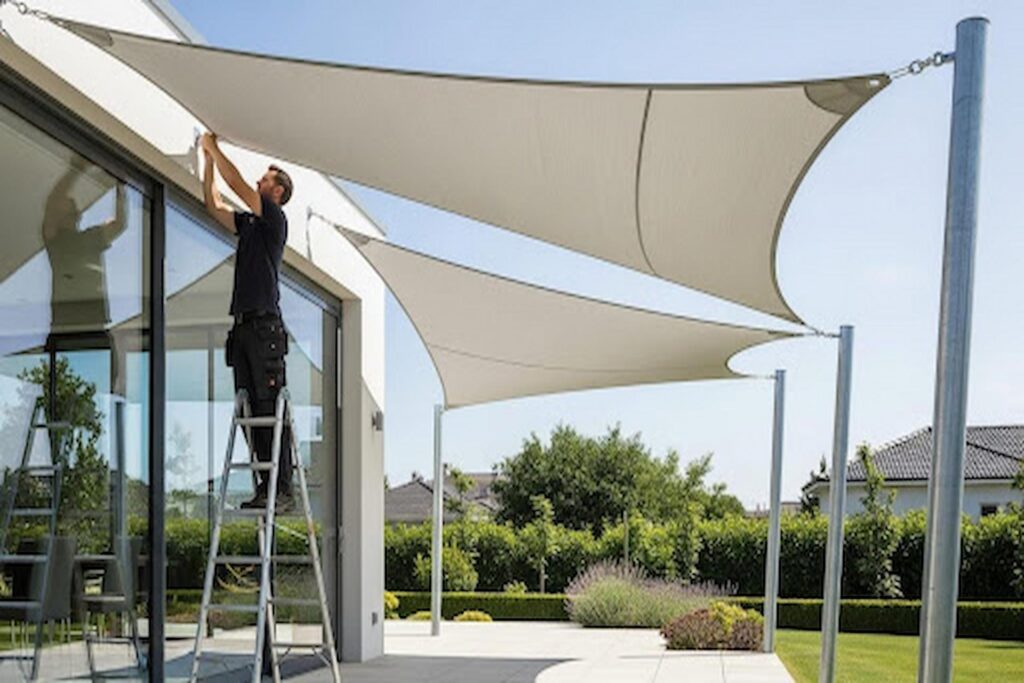
In Australia, our relationship with the sun is complicated. We love the outdoor lifestyle, the backyard cricket, and the Sunday barbeques. However, we also respect the intensity of the UV rays that beat down on us. Finding the balance between enjoying the open air and staying safe is a challenge every homeowner faces.
Traditional solutions like pergolas, gazebos, or timber verandahs are effective, but they come with a compromise. They often feel heavy. They require numerous posts that clutter the space, and their solid roofs can block the natural light, making the inside of your home feel dark and gloomy. This is where outdoor shade sails offer a brilliant alternative.
These structures are designed to float above your outdoor area. They provide essential protection from the heat without closing you in. Because they rely on tension rather than a rigid frame, they can span large distances with minimal support posts. This means you keep your view of the garden, the pool, or the horizon, while still enjoying a cool, comfortable sanctuary.
The Open-Air Advantage
The primary appeal of choosing outdoor shade sails over a solid roof is the atmosphere they create. A solid roof traps heat. On a scorching day, the air underneath a metal or polycarbonate patio cover can become stifling, as the hot air has nowhere to escape.
Shade sails use a high-quality knitted fabric. This mesh design is ingenious. It is tight enough to block up to 99% of harmful UV rays, preventing sunburn and protecting your skin. Yet, it is porous enough to allow hot air to rise through the fabric. This creates a natural convection current. As the hot air escapes, fresh air is drawn in from the sides. The result is a shaded area that can feel significantly cooler than the surrounding sunlight, without the “oven effect” of a solid roof.
Furthermore, the visual impact is lighter. The sweeping curves and twists of a well-designed sail add a modern, architectural element to the home. It feels like a sculpture rather than a heavy construction project.
Engineering the Perfect Shape
One of the biggest misconceptions is that a shade sail is just a flat piece of cloth. If you install a flat sail, it will sag in the middle and flap violently in the wind. This flapping causes wear and tear, leading to premature failure.
Professional outdoor shade sails are designed with a “hypar” shape—short for hyperbolic paraboloid. This creates a twisted effect where attachment points are set at different heights. This twist is not just for looks; it is essential engineering. It ensures that the fabric is under equal tension across the entire surface.
When the wind hits a tensioned, twisted sail, the air flows over it smoothly, much like an aircraft wing. This stability means the sail stays tight and quiet, even during the blustery storms we often experience in coastal or exposed Australian suburbs.
Protecting Your Assets
While we often focus on protecting people, the Australian sun is incredibly damaging to property as well. UV radiation destroys car paint, fades timber decking, and cracks outdoor furniture.
Installing outdoor shade sails over a driveway is a cost-effective way to protect vehicles. It acts as a carport without the need for a garage door or brick walls. It keeps the interior of the car cool, so you don’t burn your hands on the steering wheel after it has been parked for an hour.
For pool owners, a sail is almost mandatory. It stops the sun from hitting the water directly. This serves two purposes. First, it protects swimmers from sunburn while they are in the water, which is when skin is most vulnerable. Second, it reduces evaporation and slows down the breakdown of pool chemicals. Chlorine degrades rapidly in direct sunlight. By shading the pool, you save money on chemicals and water top-ups.
The Importance of Professional Installation
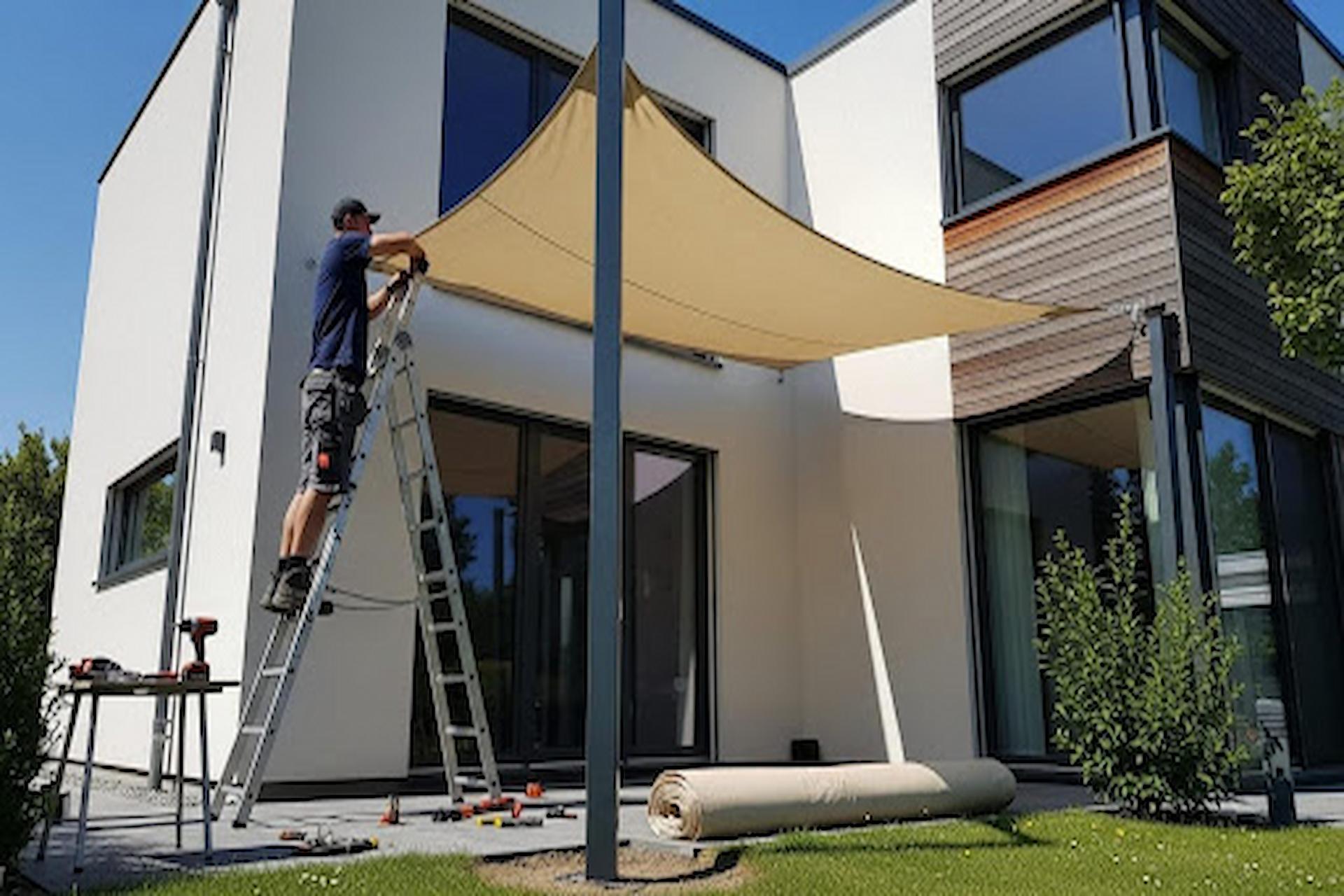
Because they look simple, some homeowners attempt to install outdoor shade sails as a weekend DIY project. This often leads to disappointment. The forces involved in a tensioned structure are massive. A large sail can exert tons of pull on the attachment points.
If you bolt a sail directly into the fascia board of your house or a standard brick wall, a strong wind can rip the fascia off or pull the bricks loose. Professional installation involves structural integrity.
The Foundation
The strength of the sail lies beneath the ground. Steel posts must be set in deep, reinforced concrete footings. The size of the footing depends on the size of the sail and the soil type. In sandy soil, the hole needs to be wider and deeper than in clay.
The Hardware
Marine-grade stainless steel is the standard for quality installations. In Australia, where many of us live near the coast, salt air corrodes standard metal quickly. Using high-quality turnbuckles and shackles ensures the sail can be tensioned correctly and won’t rust and fail after a few seasons.
Navigating Council Regulations
Before you start digging holes, it is vital to understand the local rules. In Australia, building regulations vary between local councils.
Generally, outdoor shade sails are considered semi-permanent structures. If the sail is large (usually over 20 square meters) or if it is attached to the existing house, you may need a building permit. Councils are concerned with wind ratings, shadow lines affecting neighbours, and street appeal.
Some heritage areas have strict guidelines on the colours and visibility of structures from the street. A professional provider like Shadewise will usually help navigate this process. They can provide the engineering drawings required to prove that the structure is safe and compliant with Australian Standards.
Design Choices: Colour and Fabric
The aesthetic flexibility of outdoor shade sails is vast. You are not limited to a single colour or shape.
Colour Selection
The colour of the fabric does more than just match your house paint. It affects the performance.
Dark Colours (Navy, Black, Charcoal): These absorb more heat and stop more light. Interestingly, they are easier to see through. If you want to maintain a view of the sky or the trees above, a dark mesh is less glary to the eye.
Light Colours (Cream, White, Sand): These reflect heat and brighten the area underneath. However, they can show dirt and pollution marks more easily over time.
Shape Configurations
You can mix and match shapes to cover a large area. Overlapping multiple triangles can create a dramatic, artistic look. However, large squares or rectangles generally provide more practical, continuous shade. The design should follow the path of the sun. A professional designer will plot where the sun sits in the sky during summer afternoons to ensure the shade falls exactly where you need it.
Questions and Answers: Common Questions About Outdoor Shade Sails in Australia
Q: Do I need a permit to install a shade sail?
In many cases, yes. It depends on the size of the sail, the height of the posts, and your specific local council regulations. Small garden sails might be exempt, but large driveway or pool covers often require a permit to ensure they are structurally sound. It is always safer to check with your council or installer first.
Q: How long do these sails last?
A high-quality commercial-grade shade sail typically comes with a 10 to 15-year warranty against UV degradation. The fabric is incredibly durable. The steel posts and hardware, if installed correctly, can last much longer. The lifespan is significantly better than cheap, off-the-shelf options found in hardware stores.
Q: Are outdoor shade sails waterproof?
Standard shade sails are made from knitted mesh, which allows rain to pass through as a fine mist. This prevents water from pooling on top and stretching the fabric. However, waterproof PVC options are available. These require stronger engineering and steeper angles to ensure water runs off efficiently and doesn’t gather in the middle.
Q: Can I take the sail down in winter?
Yes. One of the benefits of outdoor shade sails is that they are removable. Many people choose to take them down during the winter months to allow more light and warmth into their home and garden. The stainless steel turnbuckles make it relatively easy to unhook the sail, clean it, and store it away until spring.
Q: How do I clean my shade sail?
Maintenance is simple. You should not put a large shade sail in a washing machine. Instead, leave it installed and wash it with a mild detergent (like sugar soap) and a soft-bristle broom. Rinse it off with a garden hose. Avoid using high-pressure washers as they can damage the UV coating on the fabric fibers.
Conclusion: Your Path to a Successful Outdoor Shade Sails in Australia
Choosing the right protection for your home is about finding a solution that fits your lifestyle. You want to be able to use your backyard, pool, or driveway without fear of the harsh sun, but you don’t want to live in a cave.