

The retail and business landscape in Australia is shifting. Walk through any modern shopping centre like Chadstone or Westfield, or stroll through the Melbourne CBD, and you will notice something. The static posters of the past are disappearing. In their place are bright, moving, dynamic screens that catch the eye and hold attention. This is the era of digital signage.
Despite the obvious visual impact, many businesses still hesitate to make the switch. They stick to traditional printed corflute or vinyl banners, believing them to be cheaper or easier. While print has its place, ignoring the power of digital displays is a strategic error that leaves money on the table. In a world where consumers are glued to screens for most of their waking hours, static imagery often fades into the background noise.
Moving to digital is not just about looking modern; it is about agility. It is about the ability to change your message instantly to suit the weather, the time of day, or your inventory levels. It turns a passive wall into an active sales agent.
The Power of Motion and Flexibility
The human eye is biologically programmed to notice movement. It is a survival instinct. A static sign relies on color and size to get attention. Digital signage uses motion. A video of a steaming coffee is infinitely more enticing than a photo of a cup. A scrolling ticker of news or special offers draws the eye naturally.
This dynamic nature allows for incredible flexibility. Imagine a cafe in Melbourne’s laneways. In the morning, their screen displays the breakfast menu with coffees and croissants. At 11:00 am, the content automatically switches to the lunch menu with sandwiches and salads. By 4:00 pm, it changes again to promote happy hour drinks.
With a printed sign, achieving this would require three different boards and a staff member to physically swap them over. With a digital system, it is automated. You set the schedule once, and the technology does the rest. This relevance increases engagement. Customers see what they want, when they want it.
Reducing Perceived Wait Times
One of the hidden benefits of screens is their ability to manage customer patience. In waiting rooms, banks, or service counters, time can drag. A customer staring at a blank wall feels every second of the wait.
By installing digital signage, you provide distraction and value. A screen can show news updates, weather forecasts, or educational content about your services. Psychologically, occupied time feels shorter than unoccupied time. A customer who watches a two-minute video about home loans while waiting for a teller is less likely to feel frustrated than one who simply stands in a queue. This improves the overall customer experience and protects your brand reputation.
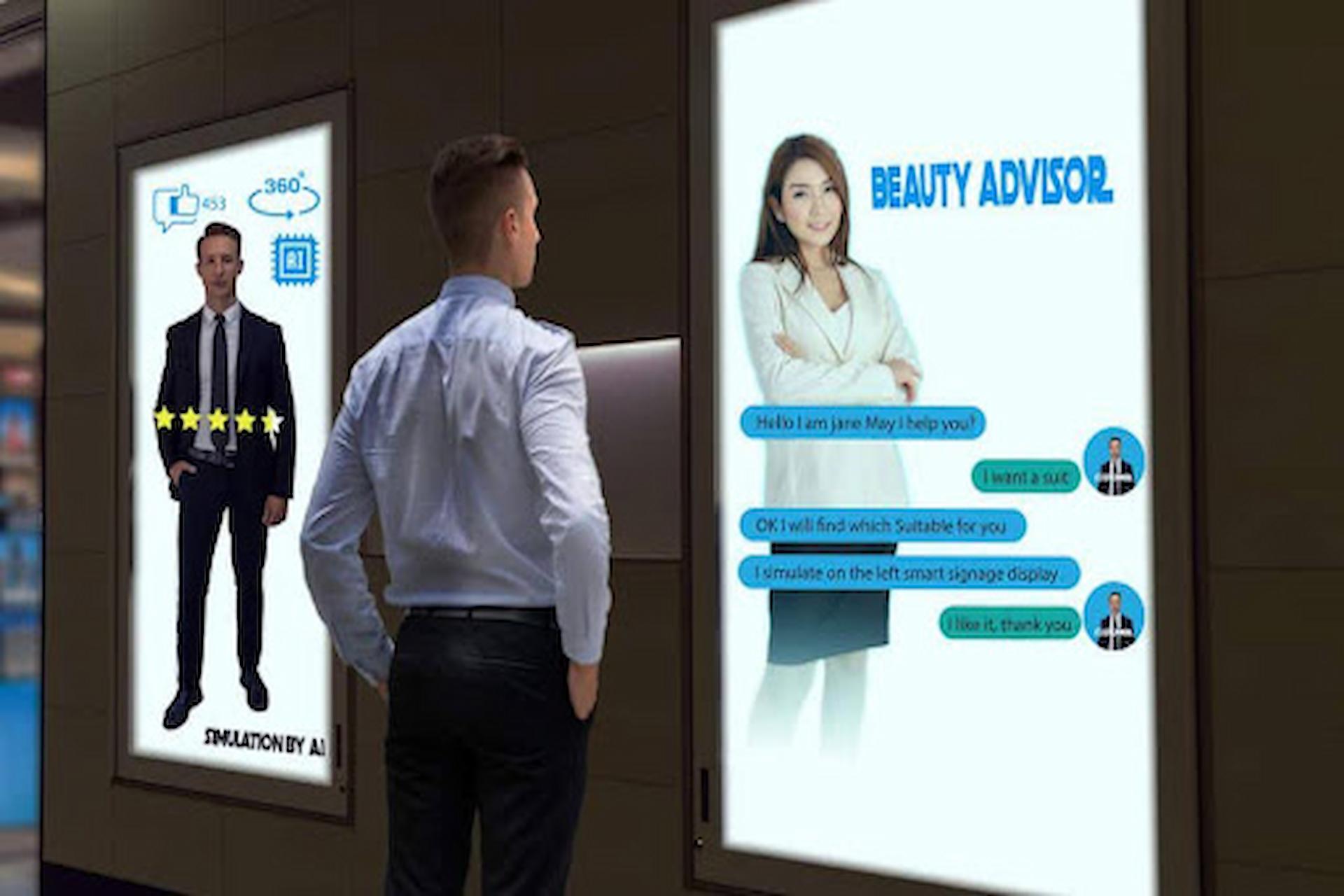
Hardware: More Than Just a TV
A common mistake businesses make is thinking they can just buy a consumer-grade television from an electronics store and hang it on the wall. This is a recipe for failure. Domestic TVs are designed to be on for a few hours a day in a dimly lit living room.
Commercial digital signage screens are engineered differently.
Brightness: Commercial panels are significantly brighter to combat the glare of shop lights or sunlight. A standard TV looks washed out in a retail environment.
Run Time: These screens are built to run 16 or even 24 hours a day, 7 days a week, without overheating or the screen burning out.
Orientation: Consumer TVs are designed for landscape (horizontal) use. Commercial screens have cooling systems that allow them to be mounted in portrait (vertical) mode, which is often better for menus and posters.
Durability: They often feature toughened glass and metal casings to withstand the dust and potential knocks of a public space.
Investing in proper commercial hardware ensures your message stays bright and your screen stays operational for years, not months.
Content Management Systems (CMS)
The screen is the canvas, but the Content Management System (CMS) is the brush. This is the software that controls what appears on the screen. In the early days, you had to plug a USB stick into the back of each screen to update it. Today, cloud-based systems allow you to control a network of screens from anywhere.
For a business with multiple locations—say, a franchise with stores in Geelong, Dandenong, and the CBD—this is a game changer. The head office can push a new promotion to all screens instantly. Alternatively, they can allow local managers to edit specific parts of the screen while locking down the main branding elements.
This software can also pull in live data. Real-time social media feeds, live traffic updates, or stock market tickers can be integrated into the display. This keeps the content fresh and ensures people look at the screen every time they pass, because there might be something new.
Outdoor Digital: Braving the Elements
Taking digital signage outdoors opens up a new set of challenges and opportunities. An outdoor LED screen acts as a beacon. It is visible from hundreds of meters away, cutting through the visual clutter of a streetscape.
However, the Australian environment is harsh. Outdoor screens must be rated IP65 or higher to be waterproof and dustproof. They need internal climate control to prevent freezing in winter and overheating in the scorching summer sun. They also need to be “sunlight readable.” Standard screens turn black when direct sunlight hits them; high-brightness outdoor LEDs remain crisp and visible even at noon.
These screens are heavily regulated. Councils have strict rules about brightness levels at night to prevent distracting drivers. They also control how often the image can change. A professional signage provider helps navigate these local laws to ensure your installation is compliant and safe.
The Cost-Benefit Analysis
The initial outlay for a digital system is higher than a printed sign. There is no avoiding that. You have the cost of the screen, the media player, the installation, and the software license. However, the Return on Investment (ROI) comes from two areas: increased sales and reduced ongoing costs.
Eliminating Printing Costs
Every time you want to change a printed sign, you pay for design, printing, and installation. If you change your offers weekly or monthly, this adds up to thousands of dollars a year. With digital signage changing the content costs nothing. You upload a new image file, and it is live. Over a three to five-year period, the digital system often becomes cheaper than the recurring cost of print.
Up-Selling and Cross-Selling
Screens are excellent at suggestion selling. A fast-food menu board can use animation to highlight a “meal deal” upgrade. A clothing store can show a video of a model wearing a complete outfit, prompting the customer to buy the jacket and the shoes, not just the jeans. By influencing the customer at the “point of purchase,” you increase the average transaction value.
Questions and Answers: Common Questions About digital signage in Australia
Q: Can I use a normal USB stick to update the screen?
Yes, most commercial screens have a “plug and play” feature. You can load images and videos onto a USB stick, plug it in, and the screen will loop that content. However, this method is manual. If the screen is mounted high up or you have multiple screens, physically changing USB sticks becomes a hassle. Using a network-connected media player with CMS software allows you to update content remotely from your computer, which is much more efficient.
Q: How much brightness do I need for a window display?
This is critical. If you put a screen in a window facing the street, you are fighting against the sun. A standard screen usually has a brightness of 300-500 nits. For a window display, you need a “high brightness” screen with at least 1500 to 2500 nits. If the screen is not bright enough, the image will look dark and unreadable during the day.
Q: Do I need a permit for an outdoor digital sign?
Almost always, yes. Local councils in Australia have strict planning schemes regarding illuminated and electronic signage. They assess the size, the location, and the impact on traffic safety and local amenity. Installing a screen without a permit can lead to fines and an order to remove it. It is essential to check with your council or have your signage provider handle the permit application process.
Q: What happens if the internet goes down?
Good quality digital signage players store the content locally on the device. They download the files from the cloud and then play them from the internal memory. This means if the internet connection drops out, the screen keeps playing the scheduled content without interruption. It only needs the internet to download new updates.
Q: Is digital signage environmentally friendly?
While screens use electricity, they eliminate the physical waste associated with print. Traditional signage creates a huge amount of paper, vinyl, and plastic waste every time a campaign ends. By switching to digital, you reduce the consumption of these physical materials and the carbon footprint associated with printing and transporting them. Modern LED screens are also becoming increasingly energy-efficient.
Conclusion: Your Path to a Successful digital signage in Australia
The transition from static to dynamic is not a fad; it is the future of physical advertising. As consumers become more accustomed to screens in their daily lives, their expectation for engaging, relevant, and timely information grows. Businesses that fail to adapt risk looking outdated and invisible.