
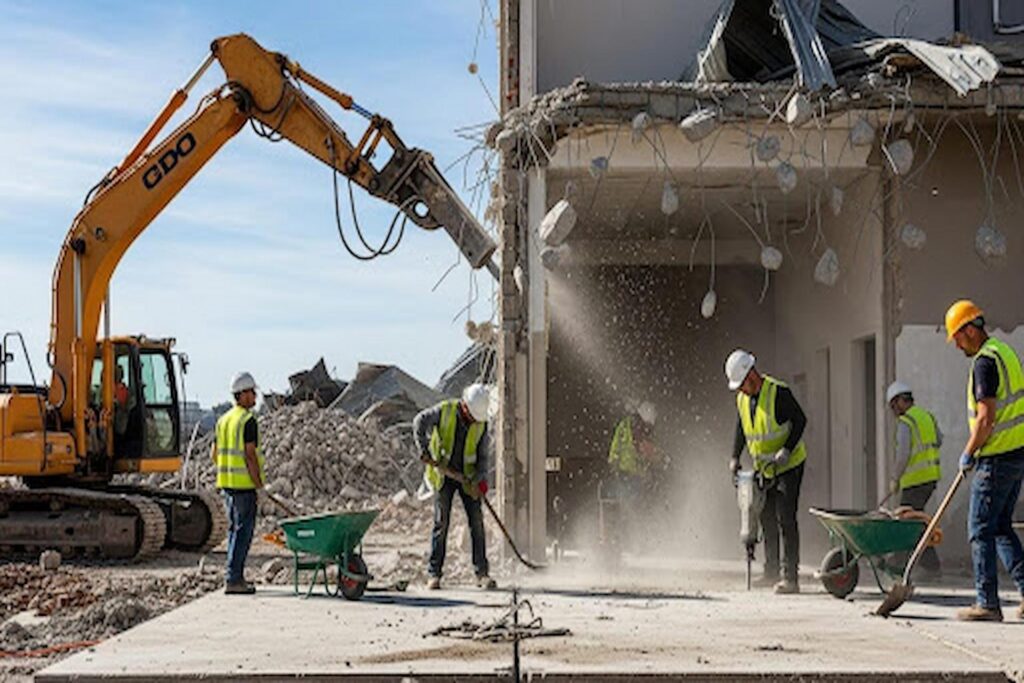
Watching a building come down can be a spectacular sight. The sheer power of the machinery and the transformation of the landscape is undeniable. However, for the property owner, the process is often accompanied by a sense of anxiety. There are worries about damaging the neighbour’s fence, hitting a gas pipe, or navigating the complex web of council regulations. It is a high-stakes environment where a single mistake can lead to significant delays and financial headaches.
This is why the role of professional demolition contractors is so vital. In the Australian construction industry, demolition is not merely about destruction; it is a precise form of reverse engineering. It requires planning, skill, and a deep understanding of safety protocols. By engaging a local specialist, you are not just hiring a machine operator; you are hiring a risk management team.
Local experts understand the unique challenges of the Sydney landscape, from the tight streets of the inner suburbs to the sandstone foundations of the coastal areas. They know how to take a structure apart efficiently while keeping the site safe and the neighbours happy. This guide explores exactly how these professionals manage the chaos to deliver a clean slate for your next project.
The Value of Local Knowledge and Compliance
Australia has rigorous standards when it comes to construction and demolition. These rules are in place to protect workers, the public, and the environment. However, navigating them can be a full-time job.
Local demolition contractors live and breathe these regulations. They understand the specific requirements of local councils across Sydney and New South Wales. For example, the requirements for a demolition permit in a heritage conservation area are vastly different from those in a new development zone.
A local expert handles the administrative burden for you. They ensure that:
Permits are in place: Work never starts without the correct Complying Development Certificate (CDC) or Development Application (DA) approval.
Notifications are sent: Neighbours and relevant authorities are informed within the statutory timeframes.
Services are abolished: They coordinate with utility providers to ensure electricity, gas, and water are permanently disconnected (abolished) and capped safely before machinery enters the site.
Attempting to manage this administration yourself can lead to weeks of delays. A professional team streamlines the paperwork, ensuring the physical work can begin on schedule.
Managing the Hazardous: Asbestos and Lead
One of the most significant risks in Australian demolition is the legacy of past building materials. Homes built before the 1990s often contain asbestos in the eaves, wall sheeting, bathrooms, and even carpet underlay. Lead paint is also a common find in older weatherboard homes.
If a general builder or an inexperienced operator disturbs these materials, they release toxic dust into the air. This not only endangers health but can also lead to the site being shut down by SafeWork NSW, resulting in massive fines and cleanup costs.
Professional demolition contractors treat hazardous material removal as a priority phase of the project.
Identification: They arrange for a qualified hygienist to inspect the property and produce a hazardous materials register.
Safe Removal: Before the heavy machinery starts, a specialized crew manually removes the hazardous materials. They use exclusion zones, protective suits, and specialized vacuums to ensure no fibres escape.
Clearance: An independent assessor inspects the site and issues a Clearance Certificate. This document is your guarantee that the site is safe for the mechanical demolition to proceed.
Mitigating Structural Risks
Demolition is a strategic process. You cannot simply knock out the bottom walls and hope the roof falls neatly. Uncontrolled collapse is a major safety hazard, especially in dense suburbs where houses are built close to the boundary line.
Specialists understand structural integrity. They plan the sequence of the demolition to ensure the building remains stable until the very last moment.
Top-Down Method: Generally, buildings are dismantled from the roof down. This keeps the debris contained within the building’s footprint.
Hand Demolition: In tight spaces, or when a wall is shared with a neighbour (party wall), contractors may use manual labour to dismantle sections brick by brick. This surgical approach prevents damage to the adjoining property.
This level of care protects you from liability. If a wall collapses onto a neighbour’s garage, the legal and personal fallout is immense. Professional contractors carry the necessary Public Liability Insurance to cover these risks, but their primary goal is to prevent the accident from happening in the first place through expert engineering.
Controlling Community Disruption: Noise and Dust
We all want to be good neighbours. A demolition project can strain relationships in a street if noise and dust are not managed effectively.
Dust is the enemy of a clean neighbourhood. A cloud of brick dust settling on a neighbour’s washing line or in their pool is a surefire way to get a complaint lodged with the council. Professional demolition contractors use active dust suppression techniques. This usually involves a crew member using a fire hose to spray a fine mist of water over the impact zone where the excavator is working. This traps the dust particles and brings them to the ground before they can drift away.
Noise is unavoidable, but it can be managed. Contractors adhere to strict working hours (usually starting no earlier than 7 am). They also use modern, well-maintained machinery. Old, poorly serviced excavators are loud and rattle; modern equipment is surprisingly quiet and efficient, getting the job done faster to minimize the duration of the disturbance.
Logistics and Traffic Management
In many parts of Sydney, the streets are narrow and parking is scarce. Bringing heavy trucks and excavators into these areas requires logistical precision.
An experienced contractor plans the traffic movement. They might use smaller trucks that can navigate tight corners, or they might organize a traffic management plan with stop-go signallers to ensure the safety of pedestrians and passing cars. They ensure that the loading of waste happens within the site boundary whenever possible, keeping the road clear.
The Environmental Focus: Recycling
Modern demolition is actually a form of recycling. Sending everything to a landfill is expensive and environmentally irresponsible.
Top-tier demolition contractors sort the waste as they go.
Concrete and Brick: Crushed to make road base and drainage aggregate.
Timber: Mulched for landscaping.
Metal: Sent to scrap yards for smelting and reuse.
By diverting up to 90% of the material from landfill, these experts reduce the tipping fees associated with the project. This efficiency often makes hiring a professional more cost-effective than you might expect, while also ensuring your project has a lower carbon footprint.
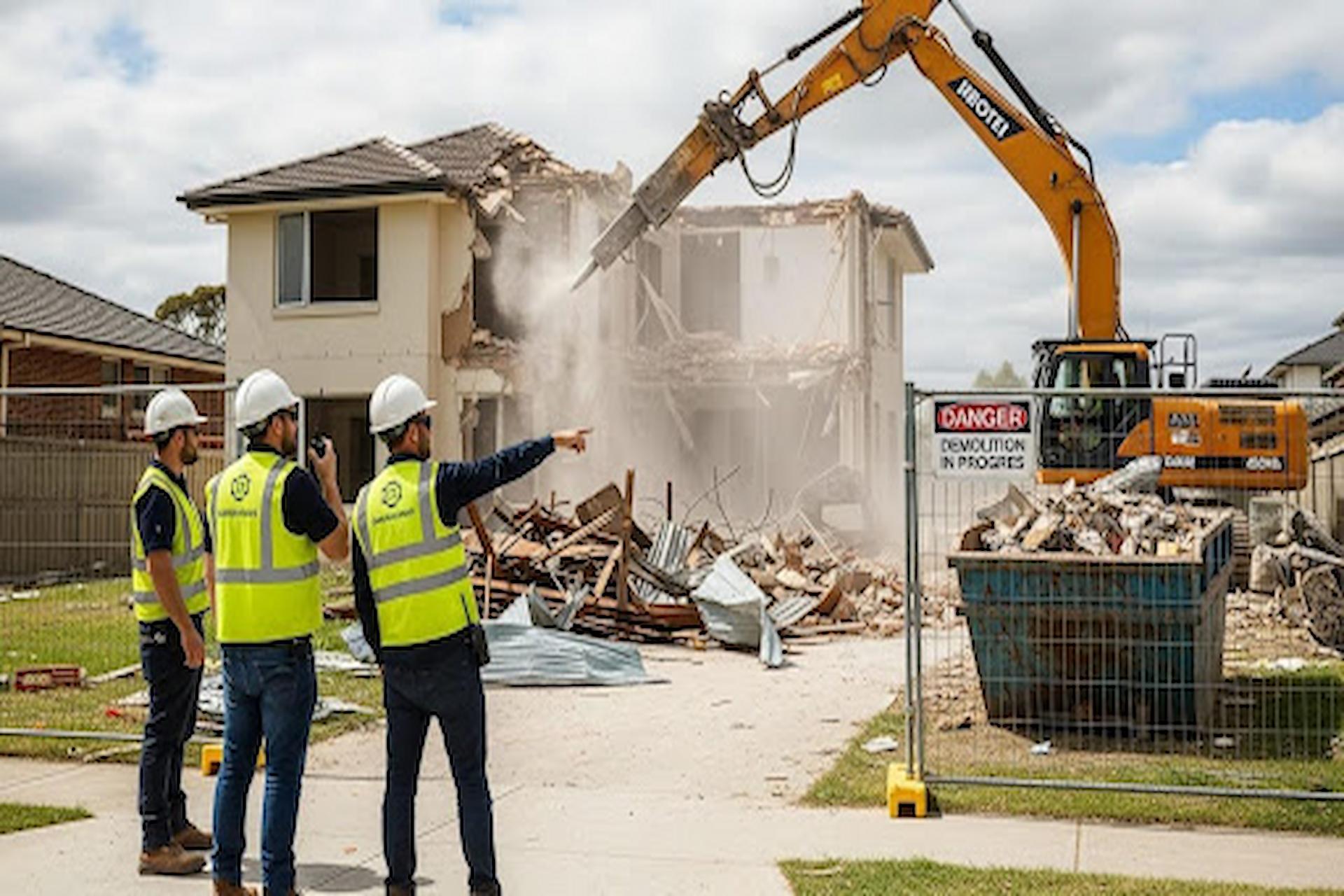
Questions and Answers: Common Questions About demolition contractors in Australia
Q: Do I need a dilapidation report before starting?
A: It is highly recommended. A dilapidation report is a photographic record of the condition of your neighbours’ properties (fences, walls, driveways) before you start work. If a neighbour later claims your demolition cracked their driveway, this report provides the evidence to prove whether the crack was pre-existing. Professional demolition contractors can often arrange this for you as part of their risk management strategy.
Q: Can I keep items from the house before it is demolished?
A: Yes, absolutely. This is your property. If you want to salvage heritage doors, stained glass windows, or timber floorboards, let the contractor know early. They can perform a “soft strip” to remove these items carefully before the heavy machinery moves in. Many homeowners sell these items to salvage yards to recoup some costs.
Q: How long does a typical house demolition take?
A: The physical demolition of a standard single-storey brick or timber home usually takes between 3 to 5 days. This includes the removal of asbestos, the mechanical knock-down, and the site clearing. However, the administrative phase—getting approvals and disconnecting services—can take several weeks prior to the start date.
Q: What happens to the tree roots?
A: A complete demolition includes “grubbing” the site. This means the excavator will dig down to remove the footings (concrete foundations) and usually the tree roots within the building envelope. This leaves the soil raked and level, ready for the builder to start digging the new trenches without hitting old obstructions.
Q: Will the contractor disconnect the electricity?
A: The contractor coordinates the process, but they cannot physically touch the council mains. They will submit the paperwork to the energy provider (like Ausgrid or Endeavour Energy) to abolish the service. The meter is removed, and the line is cut at the street. The contractor cannot start work until they have the official letter confirming the power is off to ensure worker safety.
Conclusion: Your Path to a Successful demolition contractors in Australia
Clearing a site is the first step toward building your future, and it sets the tone for the entire project. By choosing to work with professional demolition contractors, you are investing in peace of mind. You are ensuring that the legal boxes are ticked, the hazardous materials are handled safely, and your neighbours are treated with respect.